
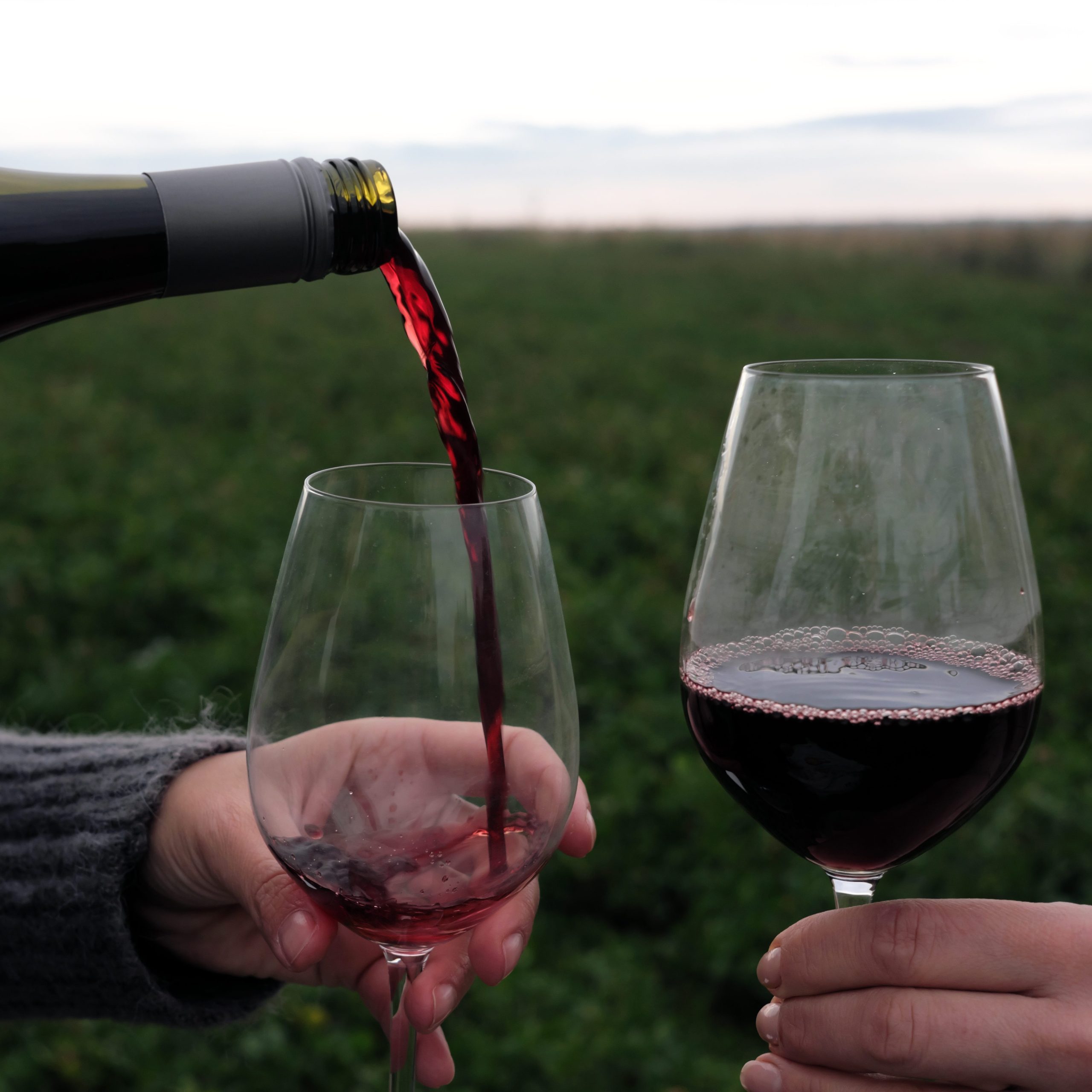
Some products describe a territory better than any map: they tell what soil lies underneath, how much sun falls on it and what the people living there are willing to do. On the Island of Elba that product has a name of its own, Aleatico, the wine that symbolises the island and also the starting point of one of the two people who stand today in Sentiero’s dining room: before pastry and before haute cuisine, Ambra studied wine.
On a small island, moreover, wine is not just another product. It occupies difficult slopes, forces decisions about what is planted and what is abandoned, and reveals the state of local agriculture better than any other crop. Anyone who understands a place’s vineyards also understands its soil, its climate and its capacity for work, so it is worth looking at that before looking at the table.
A red wine dried in the sun
Aleatico is a red grape with a strikingly recognisable aromatic profile, and on Elba it is handled in a way that demands patience: the harvest comes in at the end of summer and the grapes do not go straight to the cellar, they are left to dry. That drying concentrates sugar and aroma, and sharply reduces the amount of wine obtained, so a great deal of fruit is needed to fill very few bottles. The result is a sweet, dense, perfumed wine, closer to the end of a meal than to its beginning; a wine born, quite literally, of letting time pass.
The grandfather’s vineyard
Ambra’s relationship with that world did not begin in a lecture hall: it began walking among the rows of her grandfather’s vineyard, on the island. As a child she was fascinated by the scent of the grapes and by the stories hidden behind each bottle, and also by the scent of the same grandfather’s citrus trees and by hands sunk into dough in her mother’s kitchen. Those two passions lived side by side for a long time without competing: one became her degree; the other became her trade.
Florence, and a thesis on the wine from home
On her mother’s advice she enrolled at the Faculty of Viticulture and Oenology in Florence. They were intense years of study and discovery, and whenever she needed to recover her balance she went back to kneading. She graduated with a thesis on Aleatico: she chose to study in depth, and with scientific method, the wine of her own land. Soon afterwards she left for Brescia, for pastry school, and from there for Spain, but that training did not stay behind.
A dessert wine, and a pastry chef
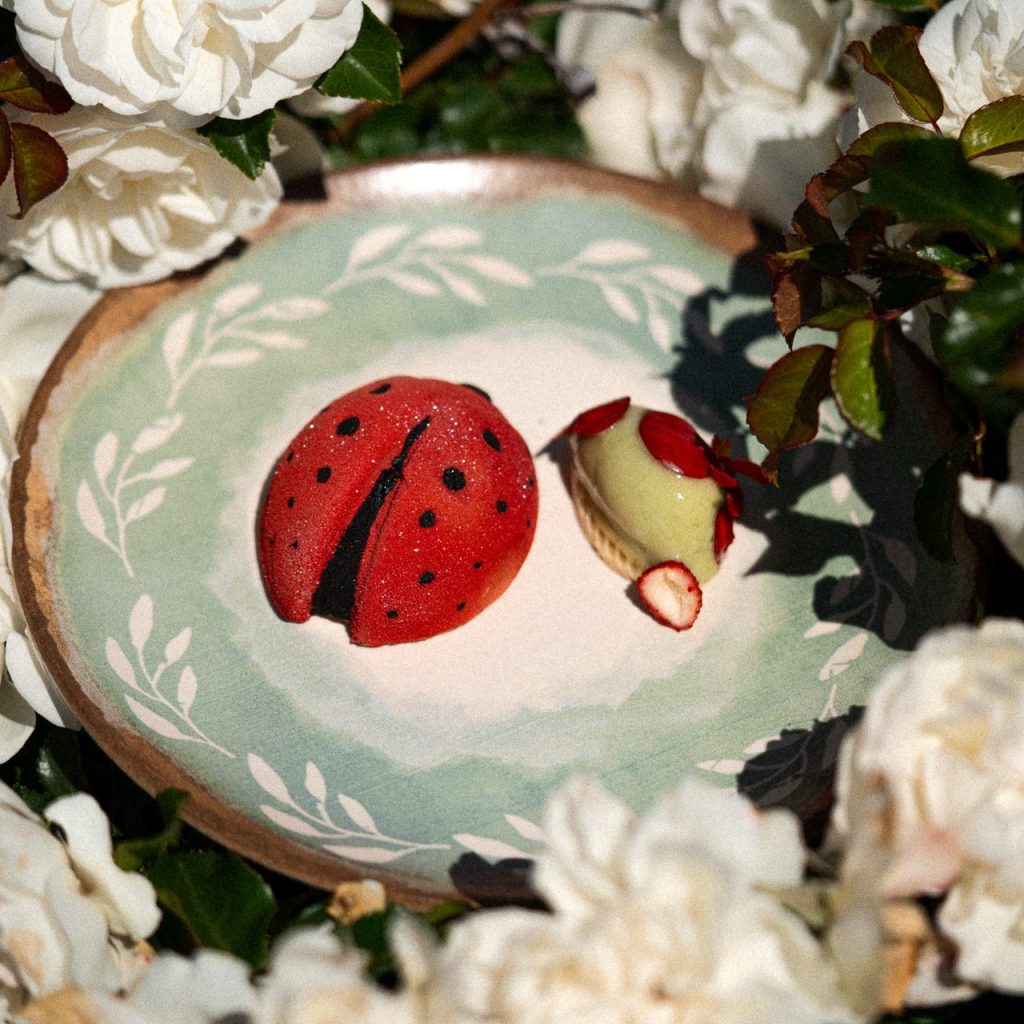
That the wine symbolising Elba is a sweet one is no minor detail, because Ambra’s trade turned out to be exactly that: the end of the meal. She trained at the CAST Alimenti pastry school, joined the team of Luca Mannori and became pastry chef at ABaC, where she also led research and development. What marked her most there were not cakes but restaurant desserts: the ones that arrive plated, at their exact moment, inside a sequence. An ending that forms part of the path rather than an appendix, which is the same idea that holds up Sentiero’s two tasting menus today.
What oenology leaves in a kitchen
Studying wine teaches how to read a vintage, how to understand that the same vineyard does not give the same result two years running and that this is not a flaw but the nature of the product. It is exactly the starting point of Sentiero: there is no fixed menu card, because the kitchen draws on what the season and the territory offer at each moment, and the ingredients are chosen each day. Anyone who has been through a faculty of oenology needs no explanation of why a menu has to change; they have watched it happen in a vineyard.
An island understood by drinking it
Aleatico explains things about Elba that cannot be seen from the harbour: a particular soil, a long sun, slopes that are hard to work and a collective decision not to give in to difficulty. It is the same island that appears on the table at Sentiero, on Via Calata Italia, before twenty guests per service and with the season as its only calendar. Because some territories are travelled on foot and some are also travelled in a single sip.


