
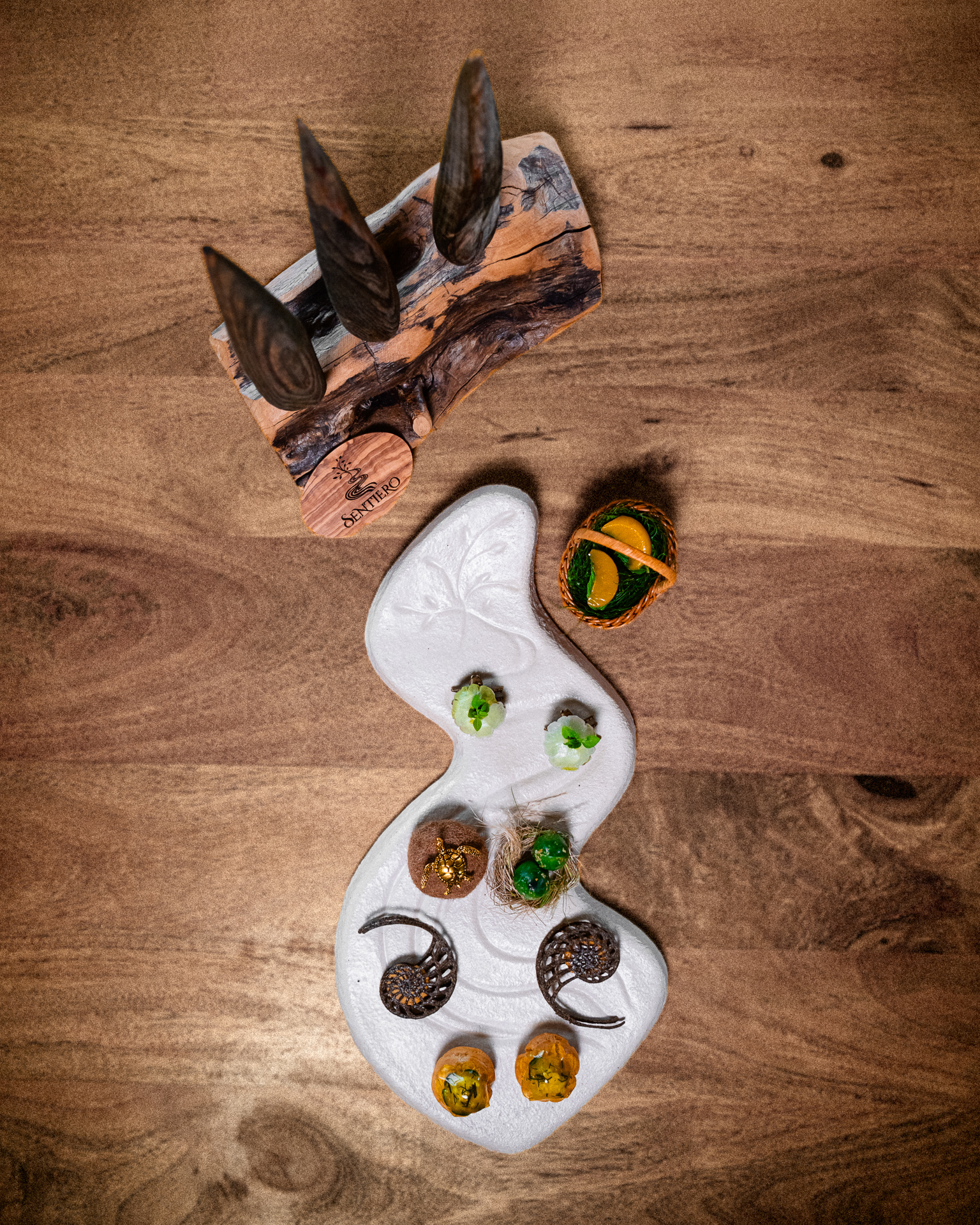
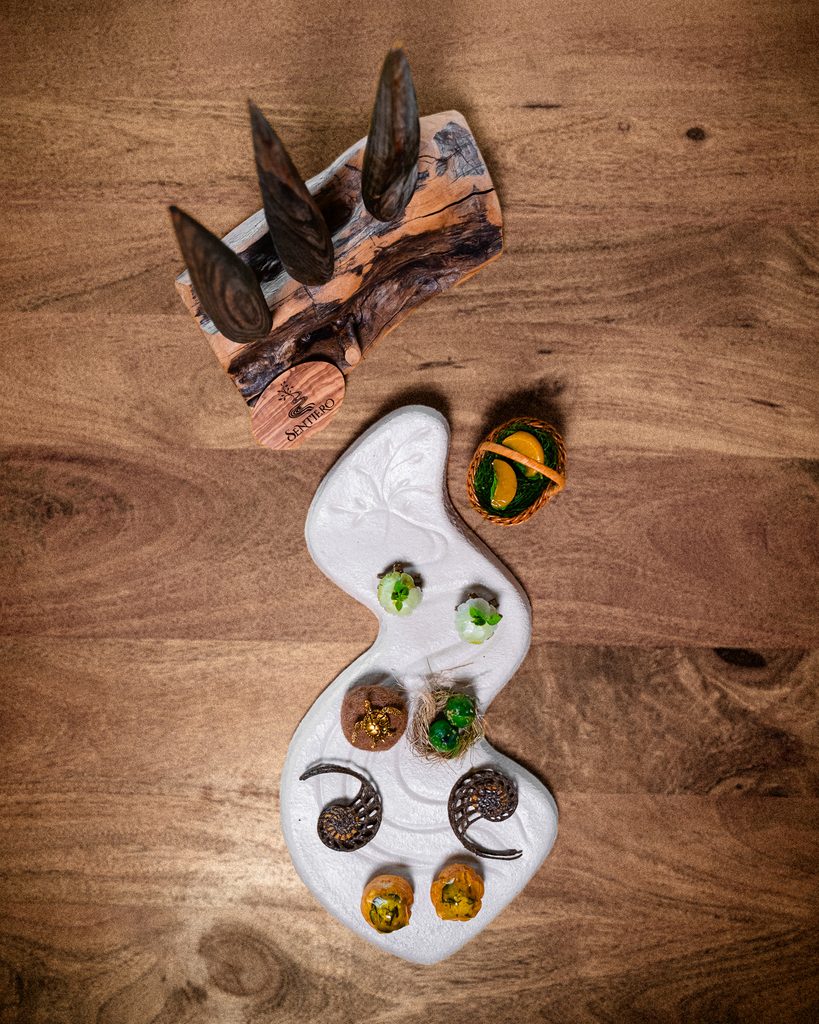
At Sentiero there is no menu card. The food comes from what the season gives, from what turns up that day and from whatever inspires Ambra and Juan Carlos that morning. The ingredients get picked the same day.
Said like that it sounds like a nice line. In October it is something far more down to earth: nobody knows months ahead what will be served, because first they have to see what autumn brings.
On the Island of Elba, autumn brings one thing in particular. It does not come from the sea. It comes from the woods, and it is the chestnut.
What changes in the kitchen when summer ends
From August to October it is not only the month that changes. What there is to cook changes too.
The herbs on the hillside are not the same any more, the gardens give other things and the woods start giving theirs. A menu that comes from all that changes with it. Not out of a wish for novelty: it simply cannot do anything else.
Some kitchens touch up the menu when autumn arrives. Here there is no menu to touch up, so they start again from scratch.
That is why in October people do not eat what they were eating in June.
The chestnut, what autumn brings on Elba
Elba’s chestnut trees are nearly all in the western part, in the municipality of Marciana and above all around Poggio. It is the high, damp side of the island, the one that never shows up in photographs of the coves.
There the chestnut was never just a handsome tree. For centuries it was food: fresh, dried, or ground into flour. That flour made the bread, the cakes, the polenta and the castagnaccio, the sweet everyone on the island grew up with.
A mountain product in a place everyone links with the sea. In October it is what says most clearly where the island really is.
A product that lasts a short time makes a kitchen move
Fresh chestnuts last a few weeks and that is that. After that there is the flour, which keeps, but the fruit has its moment and waits for nobody.
For a restaurant with a fixed menu, that is a headache with suppliers. For a kitchen without one, it is simply how things go.
Working this way means more work. The order of the courses has to be rebuilt, things tasted again, a course that was working taken out and another put in its place. Nobody leaves the menu closed at the start of the season and repeats it at the end.
In return, an October dinner can only be an October dinner.
Two paths, two ways of taking in autumn
There are two tasting menus, and autumn gets into each one through a different door.
Sentiero in the Greenery is the one closest to the ground: plant-based, seasonal, made with hillside herbs and a Mediterranean eye. It is the one that moves most when what grows changes.
Sentiero among the Clouds is the freer side of the kitchen. It goes without a map, following whatever the day gives.
Neither one acts as though it were the better of the two. What changes is the way of looking, not the wish for the dinner to make sense from start to finish.
Twenty guests, and someone who explains it
Twenty people sit down per service at Sentiero, not one more, because with more guests the details cannot be looked after in the same way.
That number is what lets Ambra and Juan Carlos come out to serve and explain. The person who thought up the dish is the one who puts it on the table and says where it comes from.
In a kitchen that changes every few weeks, that shows. An October course has a reason it did not have in June, and it makes more sense when the person who decided it says so.
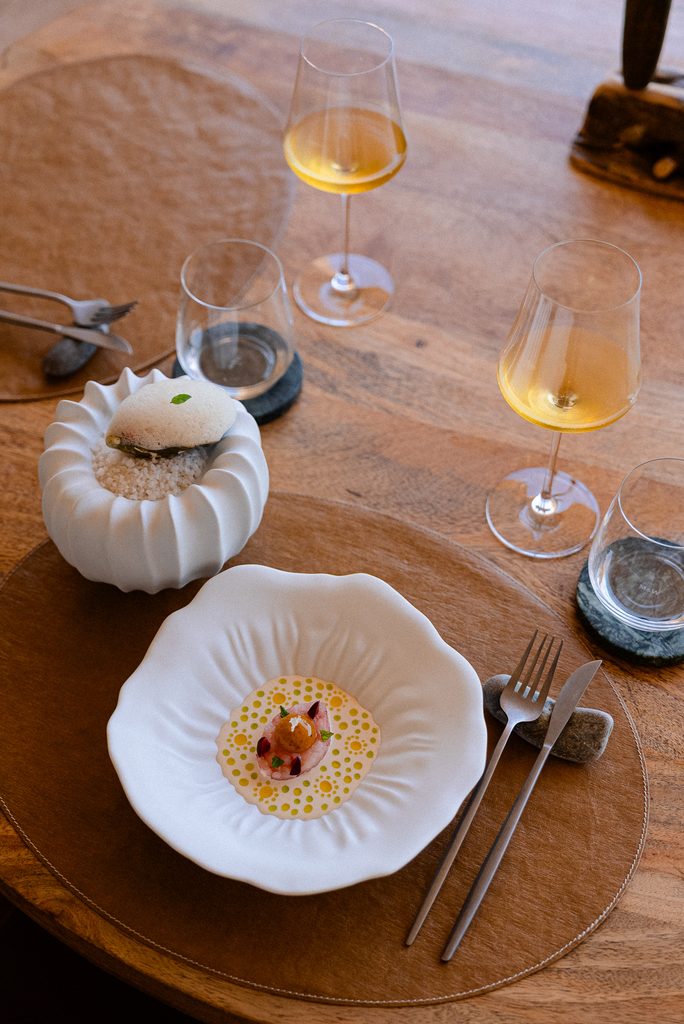
Waiting is work too
Some restaurants have the same dish all year round, and some people go looking for exactly that. That is fine.
At Sentiero they chose the opposite: promise nothing in advance and come to each season with the table open to whatever turns up.
That is why October here is not a filler month. It is the last of the season, it brings its own thing, and the kitchen had been waiting for it since opening day.


